Compare materials in the same virtual circuit
Once a child can complete a circuit, the next useful question is what happens when one connecting part changes. A virtual test lets you compare modeled objects while keeping the battery, bulb, and remaining wires the same. This guide emphasizes the evidence from a controlled comparison rather than simply getting a lamp to light. The investigation stays on screen and does not require testing household electrical equipment.
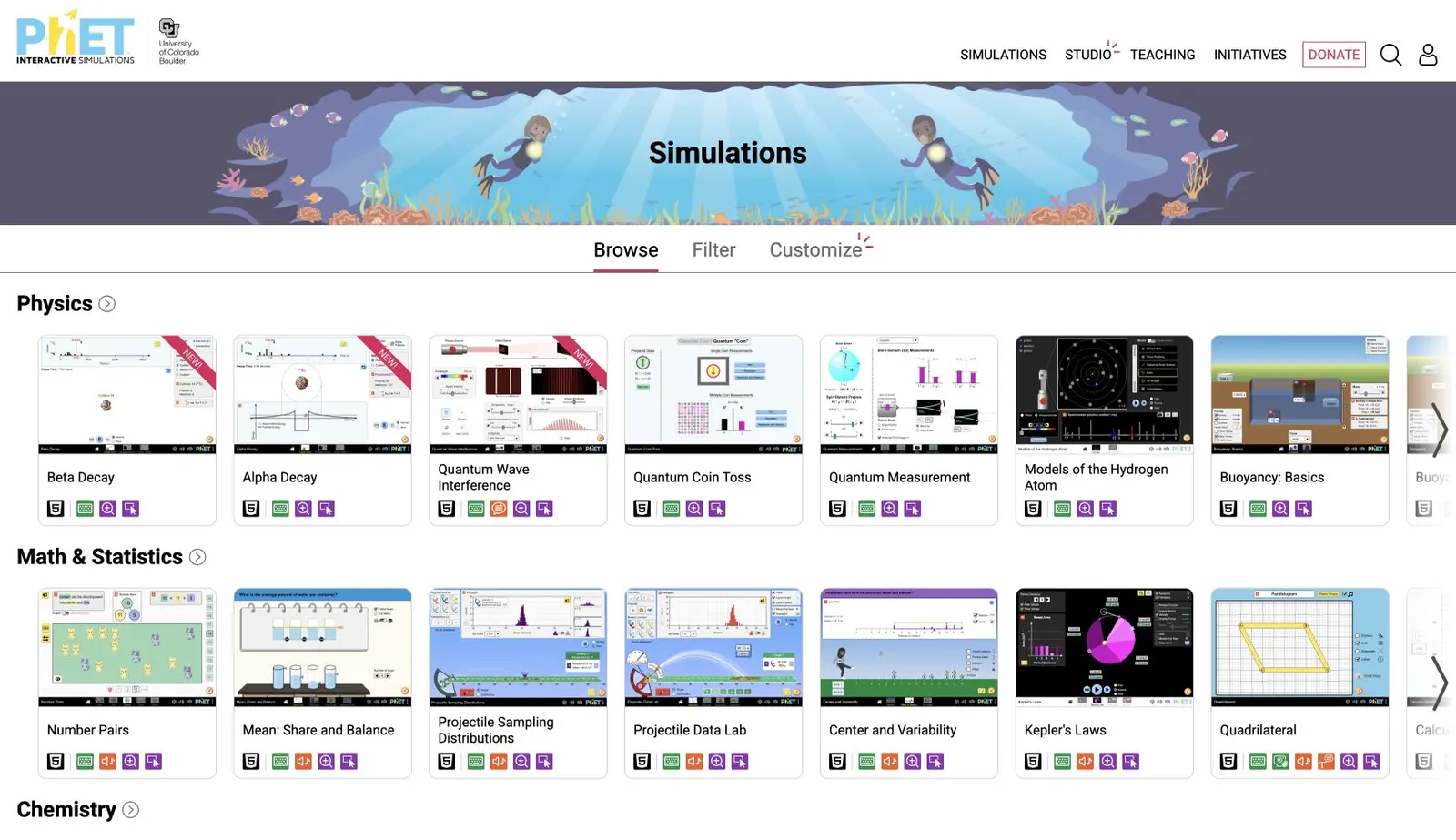
Why these resources fit
PhET's Circuit Construction Kit: DC includes everyday objects alongside wires, batteries, bulbs, and current displays. The Exploratorium's Circuit Boards explains a broader approach to tinkering with components and variables. Choose PhET for the specific modeled-object comparison. Read Circuit Boards as adult planning context about connections and changing variables, rather than as a claim that its physical materials behave exactly like the simulation or as an instruction to copy every setup at home.
Resources worth comparing
PhET Interactive Simulations
Open Circuit Construction Kit: DC and compare the paper clip, eraser, and pencil components in one otherwise unchanged loop.

Exploratorium
Read Circuit Boards for adult context on tinkering with electrical connections and variables; the guide itself uses only the virtual model.
Make the shortlist fit your family.
This guide draws on directory reviews. Age fit, costs, sign-in, advertising, privacy, and accessibility are unconfirmed for individual activities. Check the provider’s current information and preview the activity with your child’s device.