Solve a missing number with a balance model
Write a box plus three equals eight, and ask what the box could hold. Instead of treating the equals sign as an instruction to announce an answer, build two amounts that have the same value. Removing three from both sides leaves the unknown on one side and five on the other. This small example gives your child a reason for the steps used to solve an equation.
Why these resources fit
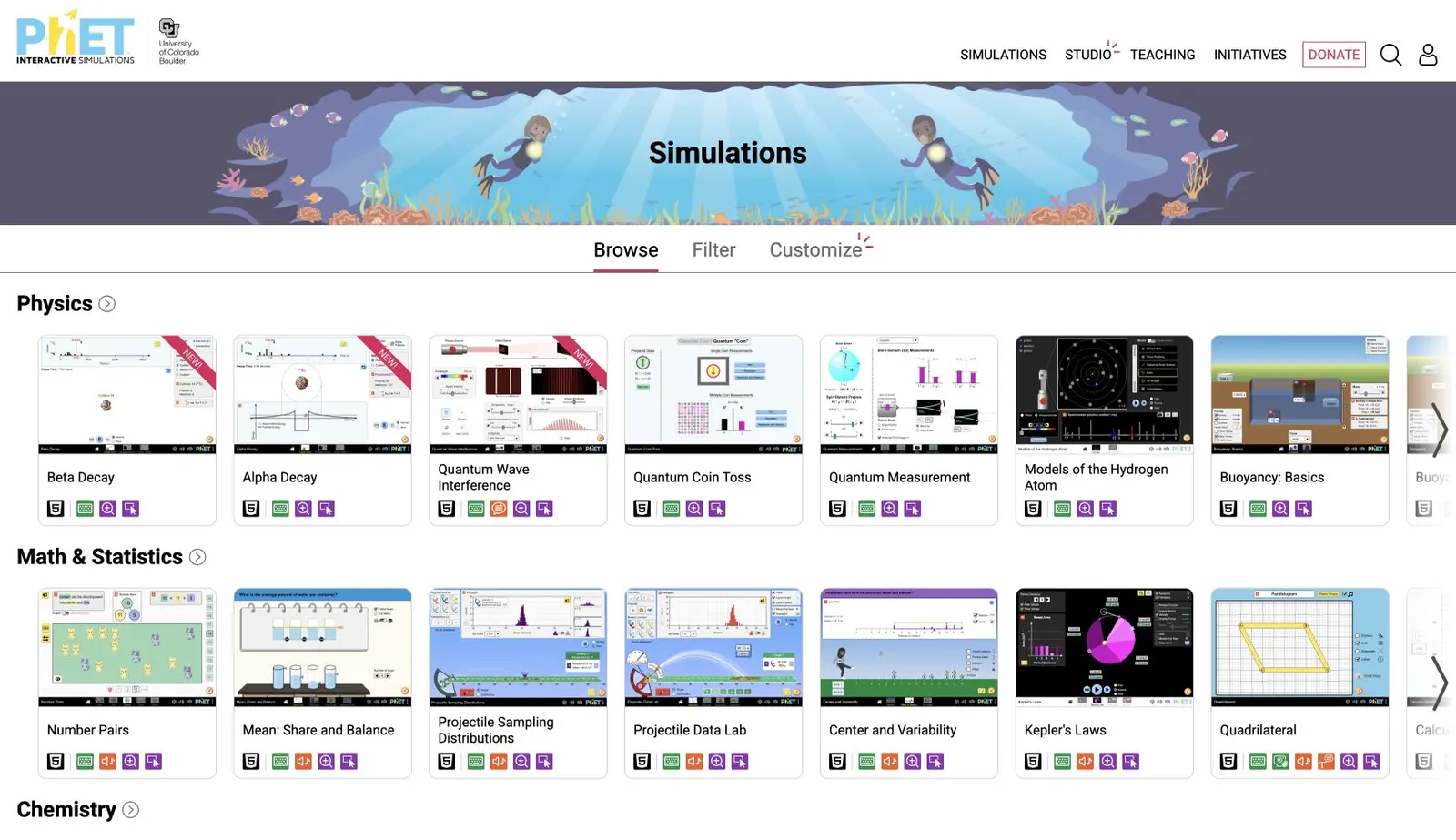
PhET’s Equality Explorer: Basics uses objects on a balance to investigate equality and unknown values. It fits a child who benefits from seeing a relationship change as objects move. NRICH’s Interactive Balance lets you compare numbers and expressions, which is useful when the child is ready to connect those pictures to written arithmetic. Start with one unknown and positive whole numbers before adding several objects or more complicated expressions.
Resources worth comparing
Make the shortlist fit your family.
This guide draws on directory reviews. Age fit, costs, sign-in, advertising, privacy, and accessibility are unconfirmed for individual activities. Check the provider’s current information and preview the activity with your child’s device.