Keep paper dry underwater with trapped air
An apparently empty cup already contains air. A small piece of paper can help a child investigate what happens to that air when the cup goes underwater. Compare a straight descent with a tilted one and look for both bubbles and water entering. This gives parents a concrete way to discuss an invisible gas without suggesting that the paper itself has become waterproof or that a dry result is guaranteed.
Why these resources fit
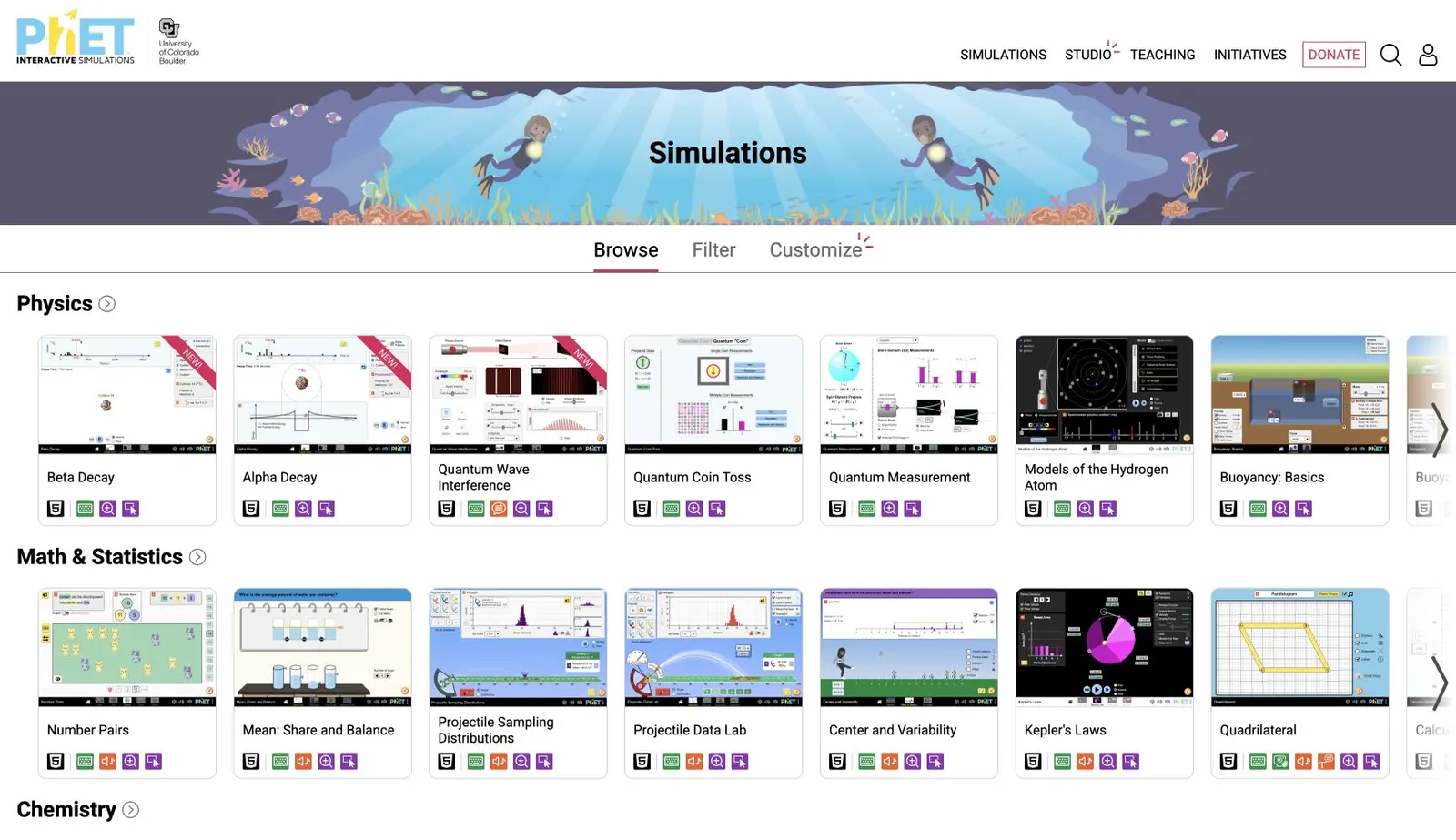
Science Fun's Dry Paper Magic provides the basic inverted-cup setup. PhET's Gas Properties offers an optional, separate particle model for adults and children who want to discuss gas occupying a container and responding to volume changes. Choose Science Fun for the physical comparison and PhET for an explanation to explore afterward. The gas model contains no paper or water and should not be described as a simulation of this exact experiment.
Resources worth comparing
Science Fun
Find Dry Paper Magic Science Experiment for the inverted-cup arrangement, then add the straight-versus-tilted comparison described here.
PhET Interactive Simulations
Preview Gas Properties as an optional gas-only model of particles in a container; it does not reproduce the water-and-paper setup.
Make the shortlist fit your family.
This guide draws on directory reviews. Age fit, costs, sign-in, advertising, privacy, and accessibility are unconfirmed for individual activities. Check the provider’s current information and preview the activity with your child’s device.