Best science activities for ages 5-7
Turn “why?” into a small investigation with science activities that invite children to observe, predict, test, and explain.
Choose for the child, not just the label.
Young children learn science by noticing the world and trying ideas. The strongest activities use ordinary materials, clear safety boundaries, and questions with more than one possible answer.
Resources worth comparing
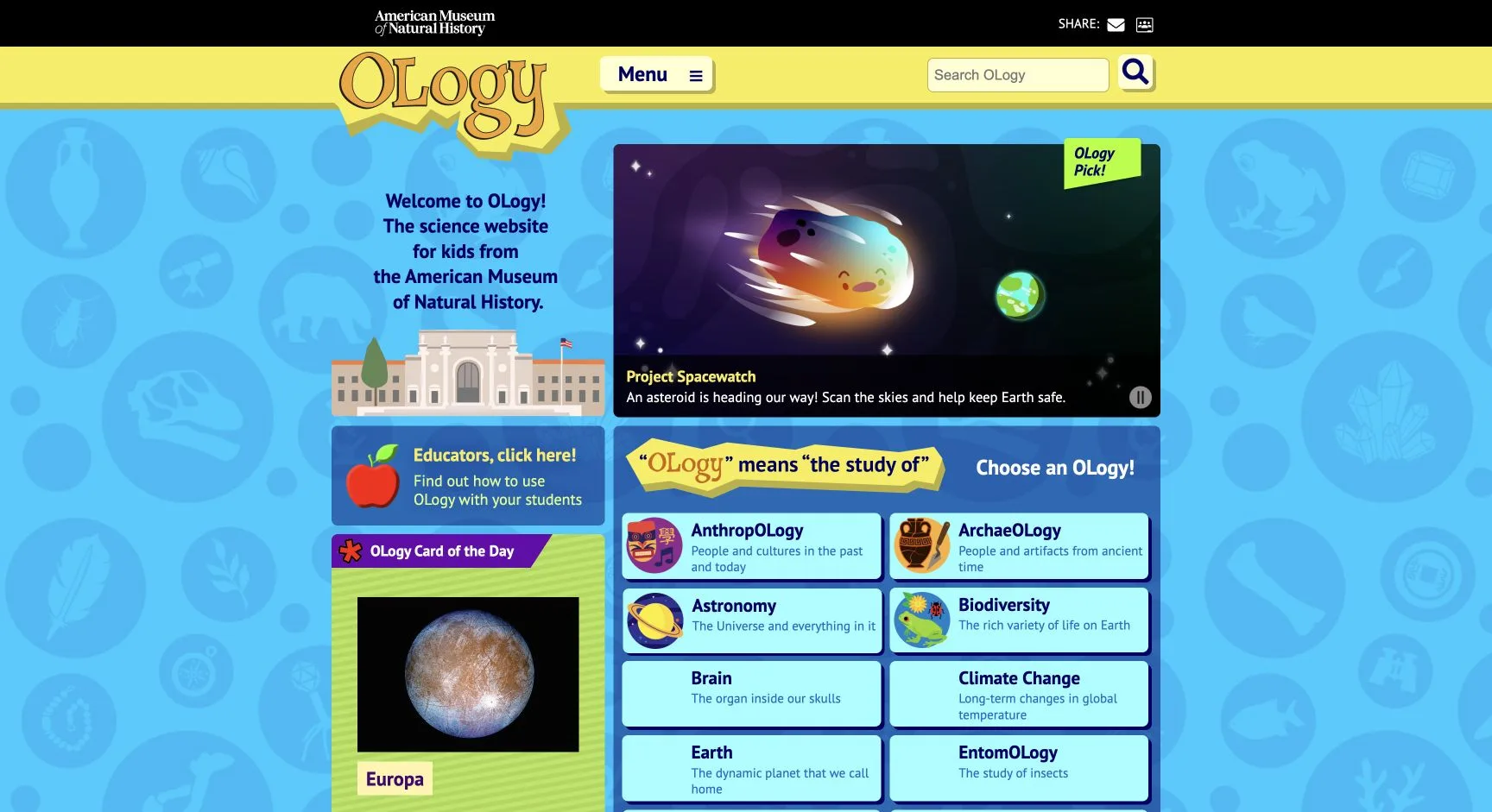
OLogy: Science Website for Kids
Museum science activities, games, stories, videos, and hands-on projects for curious kids. It is listed under Science, Nature & environment, and History & culture for ages 5-18. Children and families can use it through a website and downloadable resources.
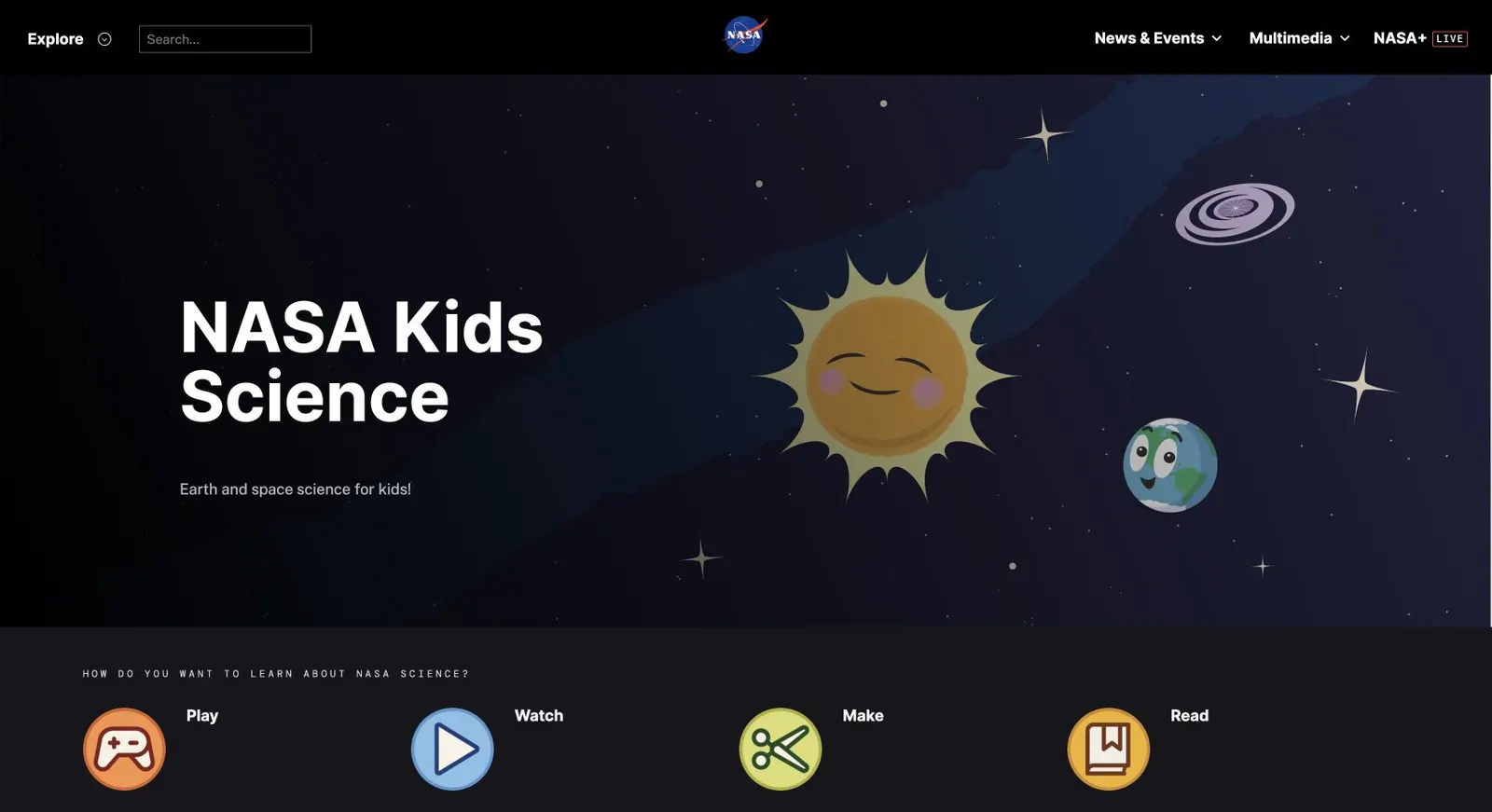
NASA Kids Science
NASA’s child-friendly Earth and space science hub with games, videos, activities, articles, and multilingual links. It is listed under Science, Nature & environment, and Geography for ages 7–14. Children and families can use it through a website.
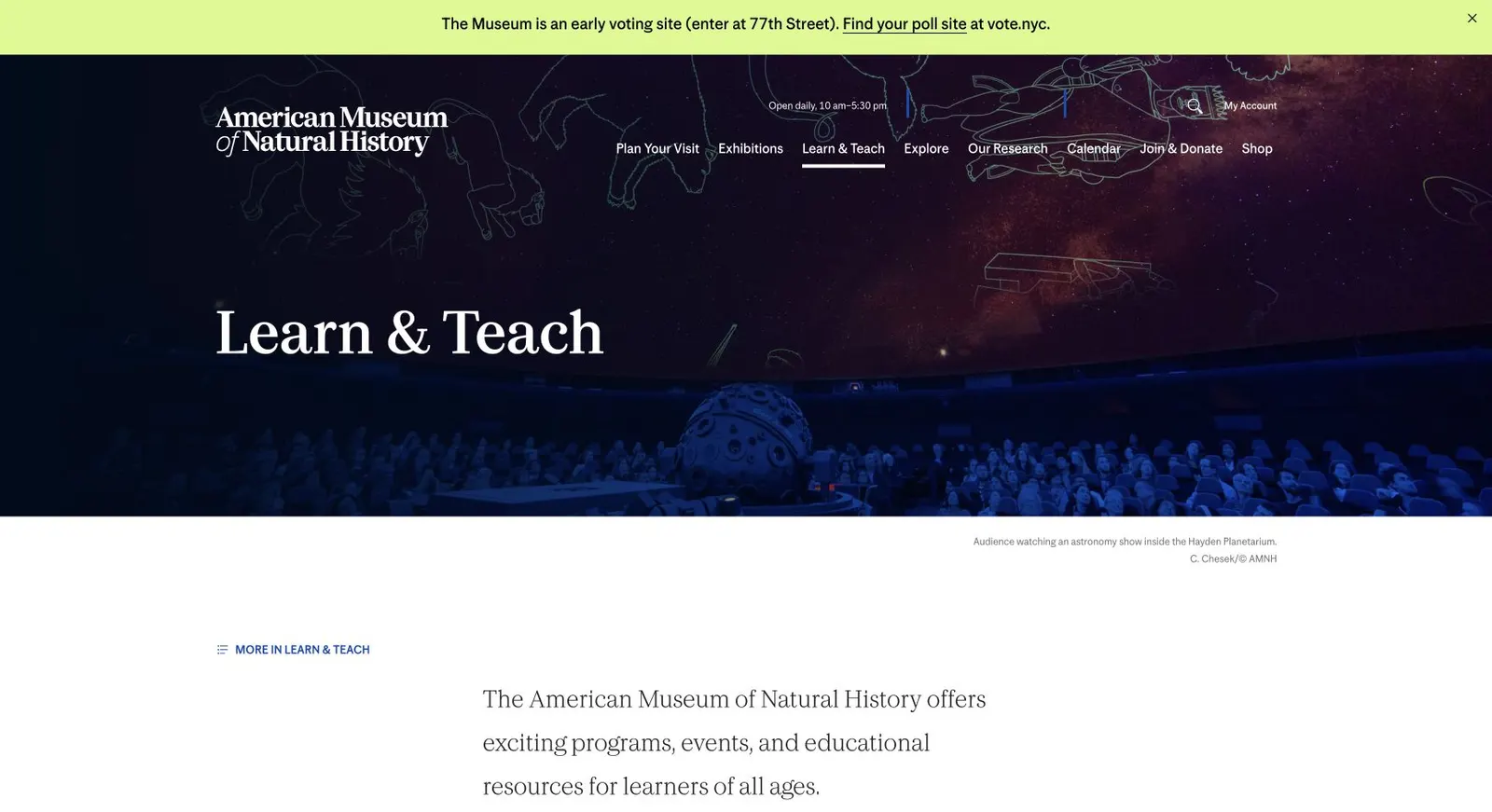
American Museum of Natural History Learn & Teach
Family programs, OLogy science activities, educator materials, virtual field trips, and museum learning from AMNH. It is listed under Science, Nature & environment, and Geography for ages 2-18. Children and families can use it through a website, downloadable resources, an Android app, an iOS app, and a physical place.
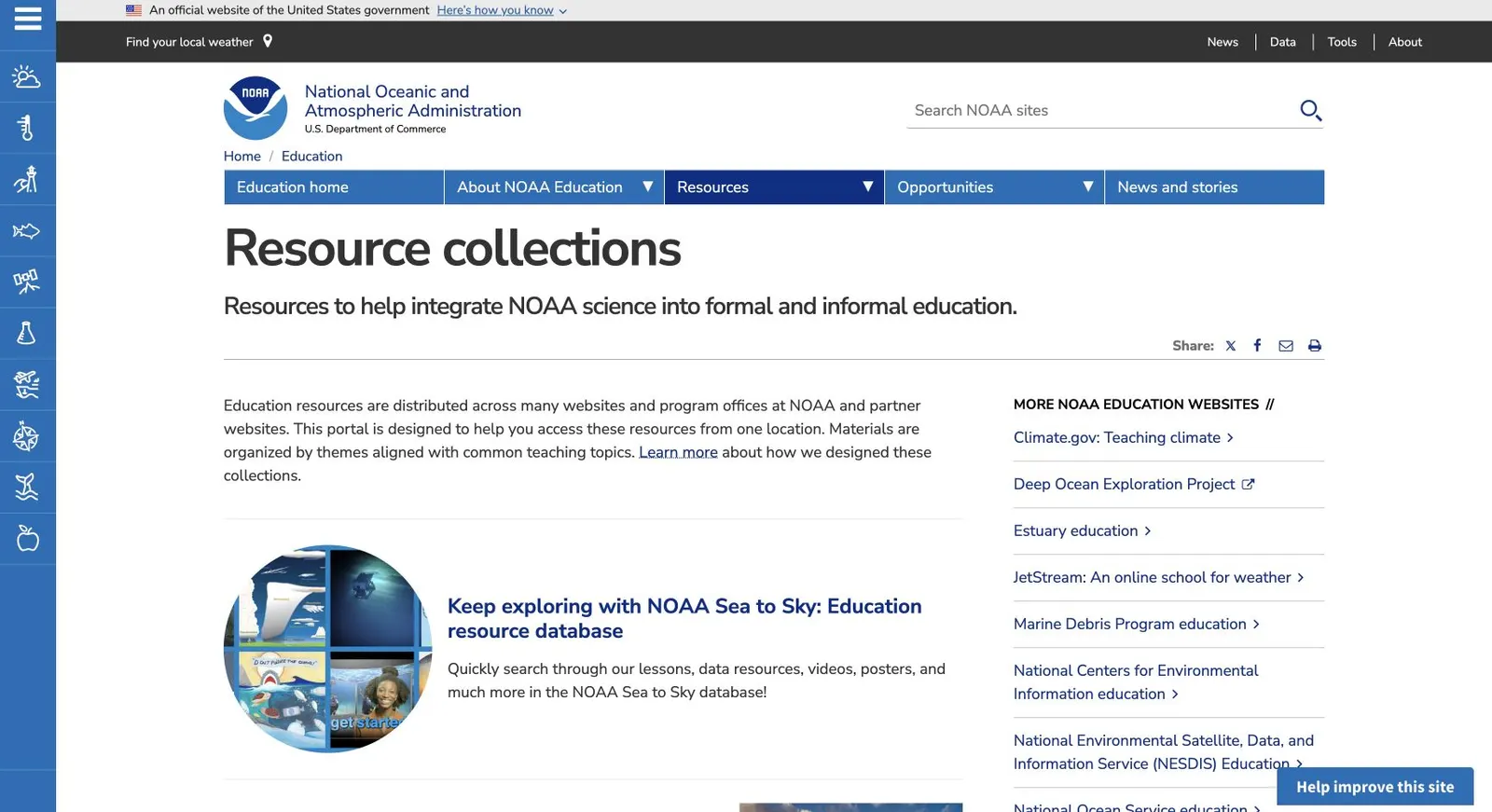
NOAA Education Resource Collections
Ocean, weather, climate, marine life, freshwater, and Earth science collections with activities and educator resources. It is listed under Science, Geography, and Nature & environment for ages 7-18. Children and families can use it through a website and downloadable resources.
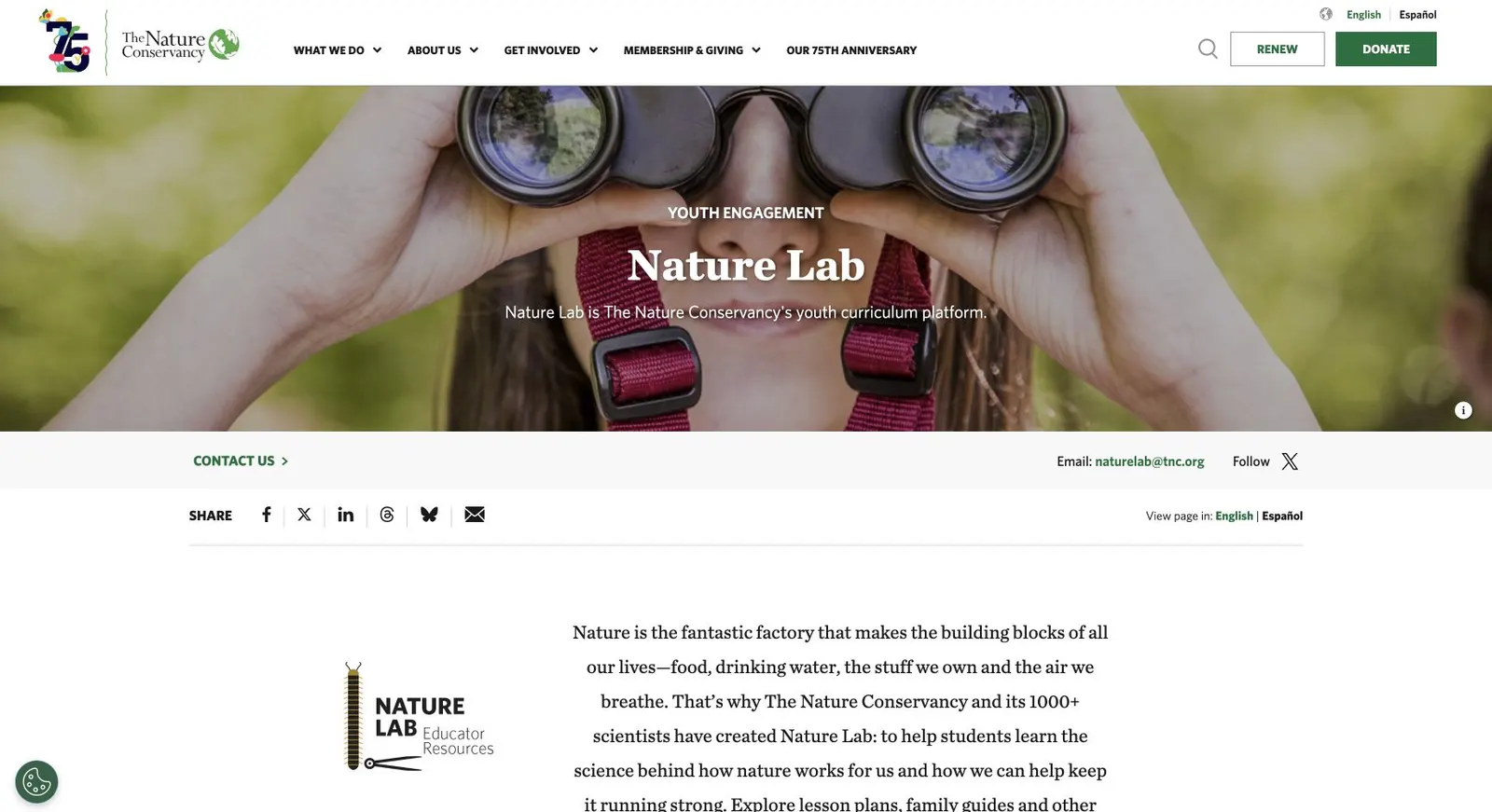
Nature Lab
The Nature Conservancy’s youth curriculum platform with virtual field trips, family guides, lesson plans, and hands-on nature activities. It is listed under Nature & environment, Science, and Geography for ages 5–18. Children and families can use it through a website.
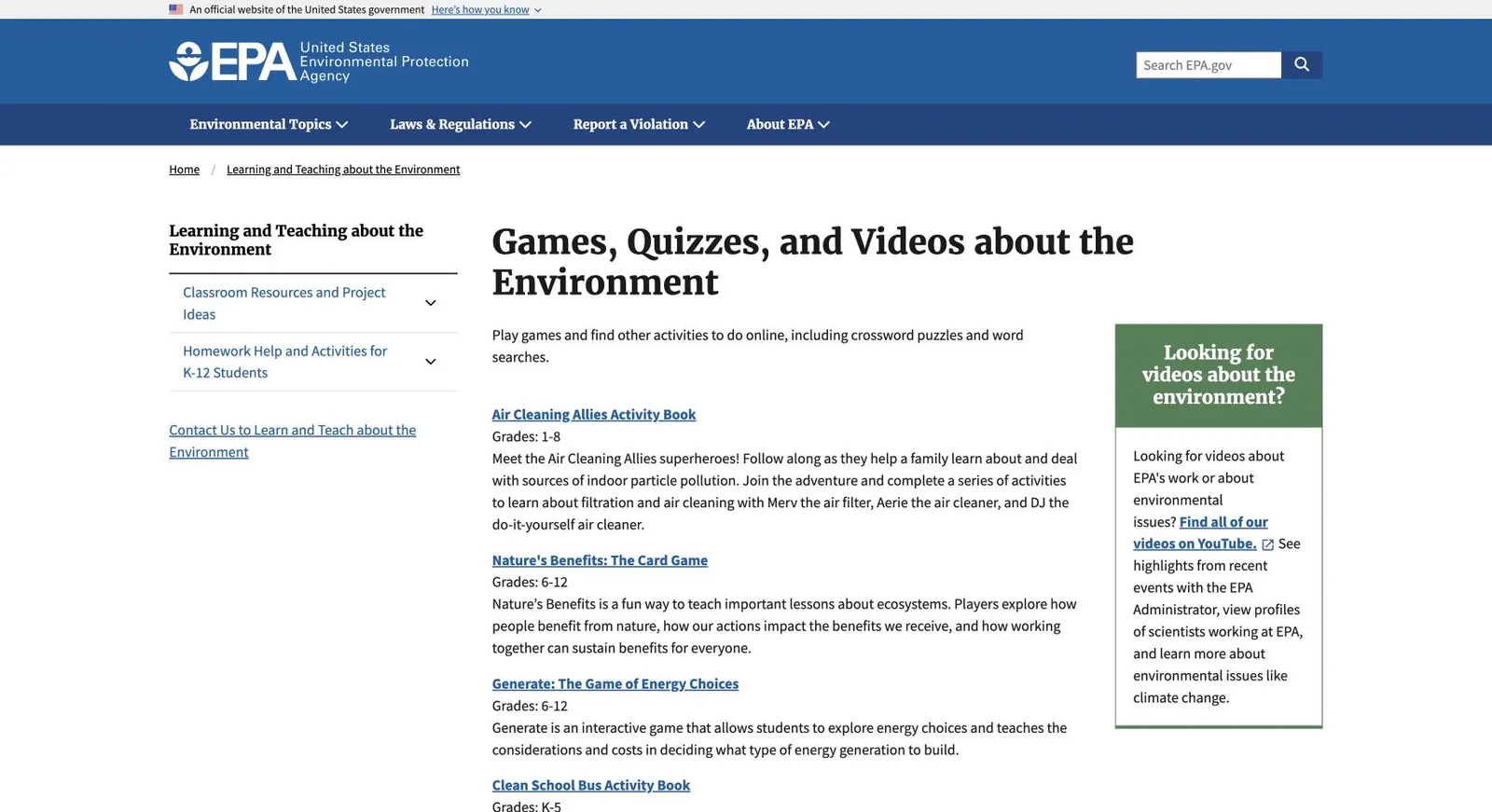
EPA Environmental Games and Activities
Environmental games, quizzes, videos, activity books, and hands-on learning ideas from the U.S. EPA. It is listed under Science, Nature & environment, and Parent & educator for ages 5-18. Children and families can use it through a website and downloadable resources.
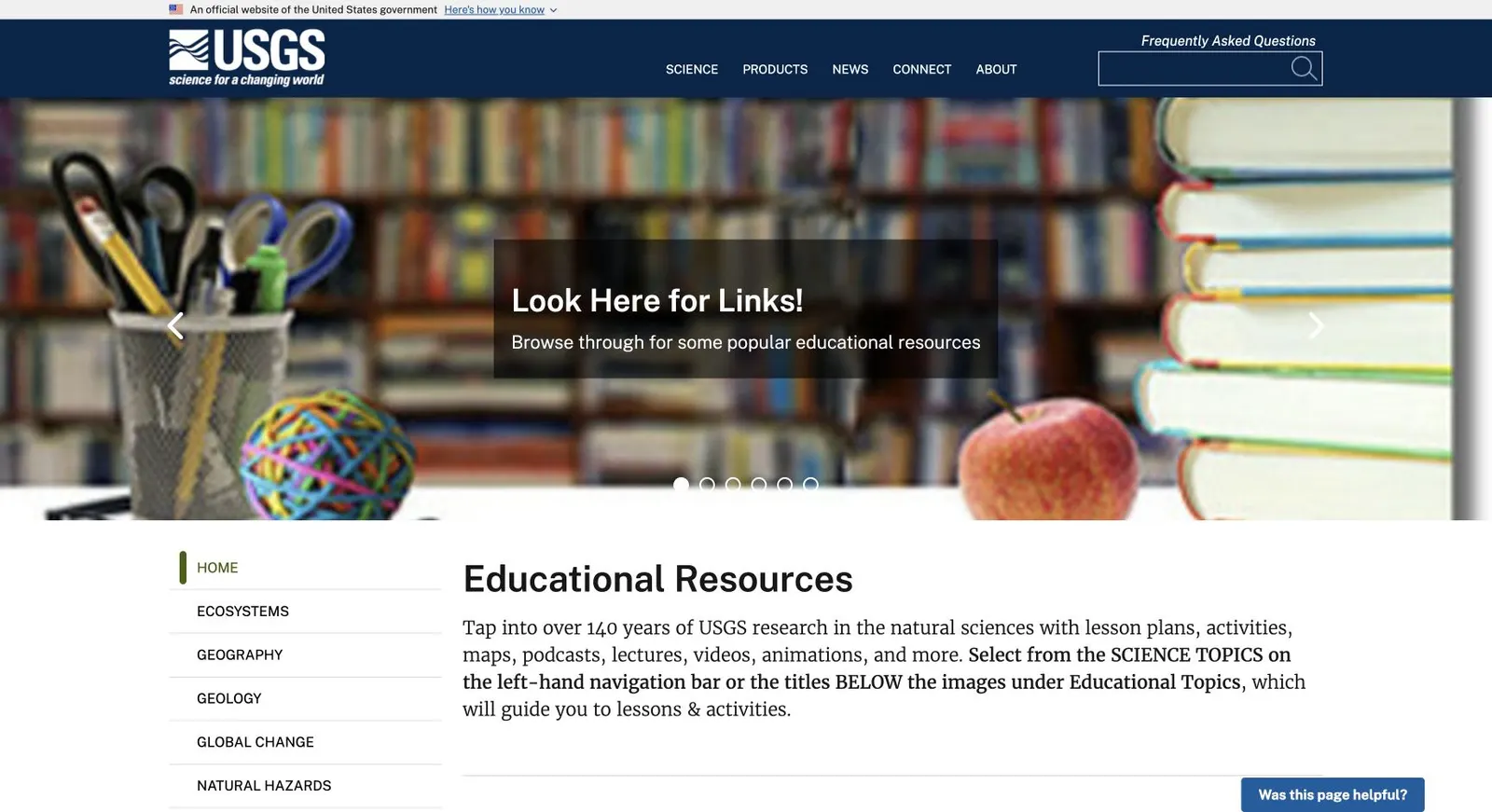
USGS Educational Resources
Natural science lessons, activities, maps, podcasts, videos, and data resources from the U.S. Geological Survey. It is listed under Science, Geography, and Nature & environment for ages 8-18. Children and families can use it through a website and downloadable resources.
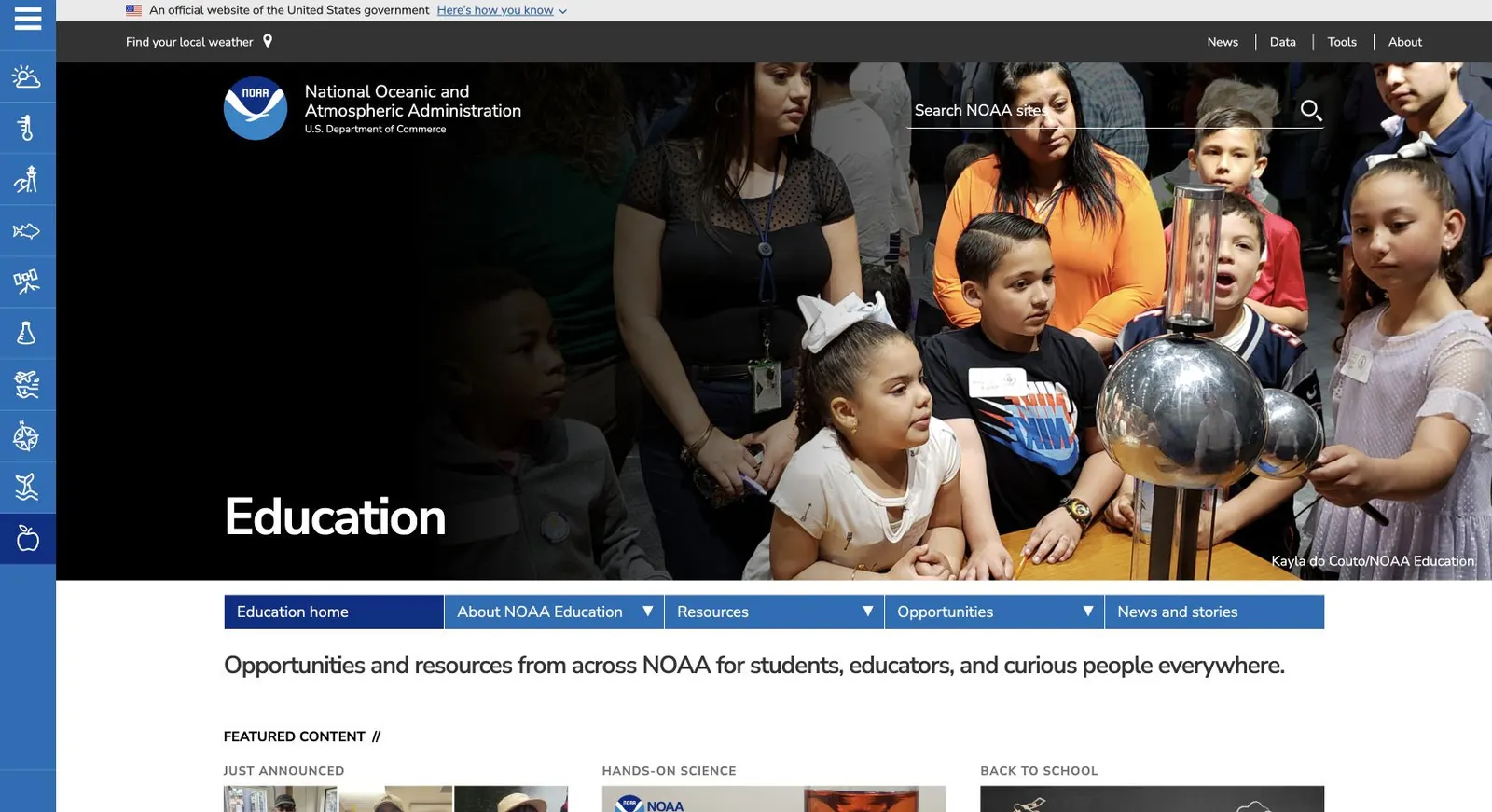
NOAA Education
Ocean, weather, climate, and Earth science activities, lessons, and resources from NOAA. It is listed under Science and Geography for ages 7-18. Children and families can use it through a website. The directory records access as free and language coverage as English.
Make the shortlist fit your family.
Start with the age range, then check the activity format and the time you actually have. Before a child begins, open the provider page and review current account, advertising, privacy, accessibility, and pricing details. These details can change.